
HISTORY
FRANZ KAFKA
Franz Kafka was born July 3, 1883 in Prague, was a writer in the German language.
Franz was Jewish.
Franz was one of six. He had two brothers who died very young (one at 6 months and the other for 15 years) and three sisters who all lived over 40 years, died in 1943 and two in 1944, three died war munial.
During the week of Kafka's parents were away from home, the mother helped her husbandwith the business, which had worked over 12 hours a day.
For four years (1889-1893) Franz attended primary school for boys. After primary schoolhe was admitted to a secondary school in 1901 surpassed all tests.
He was admitted to the University of Prague. He began studying chemistry, but switched tolaw after two weeks.
He started a book club, literature and other activities.
After the first year he made two friends, the journalist Felix Weltsch and Max Brod.
He obtained his doctorate in 1906 right.
In 1917 he had tuberculosis, especially his family endured the sister Ottla.
A holiday in Berlin in July 1923 he met Dora Diamant and move temporarily to Berlin.
He was the author of three novels:
-The trial.(1925)
-The Castle. (1926).
America. (1927).
-He also wrote two short novels:
The prison-colony. (1914).
-The Metamorphosis. (1915).
His books were fiction, usually.
In 1924 tuberculosis was worsened by the medicine used. He returned to the sanatoriumof Dr. Prague. Hoffmann, where he died on July 3, 1924. He was buried eight days later.
Kafka died before he sent him a letter to his friend Max Brod said that not publish his books and letters that burn, but Max ignored him, all the books were published.

NAPOLEON'S DEFEAT IN WATERLOO
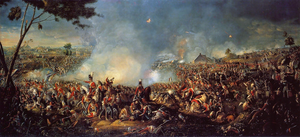
The Battle of Waterloo was fought the 18 June 1815 near Waterloo, in present-day Belgium.
This scale shows you that Napoleon fought not against one army, but six.


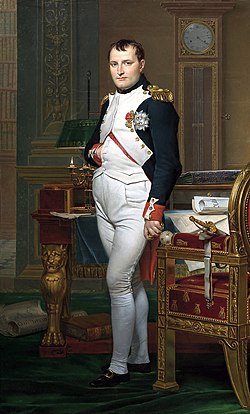 The defeat at Waterloo put an end to Napoleon's rule as Emperor of the French.
Napoleon delayed giving battle until noon on 18 June to allow the ground to dry. Wellington's army, positioned across the Brussels road on the Mont-Saint-Jean escarpment, withstood repeated attacks by the French, until, in the evening, the Prussians arrived in force and broke through Napoleon's right flank. At that moment, Wellington's Anglo-Allied army counter-attacked and drove the French army in disorder from the field.
CHARLES V
Charles V was holy roman emperor, king of Spain, Naples, Sicily and king of the Burgundian territories. He was called Charles I in Spain, though he is also commonly called Charles V.
Philip I ( known as Philip the handsome) and Joanna (known as the mad of castile) were his parents.

The yellow part is Charles V empire.

Charles V had a son called Philip II and he made the empire week. He did this by telling Germania that they didn't kneed protestant that they were Catholic.

THE MUSLIN EMPIRE IN SPAIN
From 711 to 1492 the muslin empire controled most of Spain. When they arrived to Spain the Visigoths ruled and the muslins kicked them out.
When they got to the Pyrenees they coudn't pass because the Francs didn't let them.
Spain got stronger and went pushing the muslins out. At the end the muslins only had granada, from Spain. And the year 1492 Spain finaly got the muslin empire out of Spain.

HANNIBAL BARCA
Hannibal was a Carthaginian leader born in the 3rd century B.C. He became the Romans' worst enemy and nearly ended the Roman Empire.
Hannibal was a Carthaginian leader born in the 3rd century B.C. He became the Romans' worst enemy and nearly ended the Roman Empire.
He set out from Carthage, travelling through north Africa to Spain, north over the Pyranees, but his problems arose as he started over the Alps in the winter. When he arrived at the Alps he had 50.000 men with him, but the treacherous journey reduced their numbers to a third.
However, this is not what caused his defeat. His own counsel in Carthage contained spies working for Rome and when Hannibal requested more supplies, provisions and men, they refused him. Due to this he had to wait many years to build up a sufficient army, but by this time, Rome had increased its power and strength and Hannibal no longer had the advantage.
He was finally defeated, the Romans then also destroyed Carthage and Hannibal committed suicide in 186 B.C.
He was finally defeated, the Romans then also destroyed Carthage and Hannibal committed suicide in 186 B.C.

This sculpture is of Hannibal Barca.
SPARTAN EDUCATION
Spartan Education also known as the Agogo.
Most important of Spartan education was the military development.
Sparta created a strict law that children would grow up strong and healthy. Nothing more at birth the child was examined to determine whether it was beautiful and rugged construction.If you fail the test would be thrown from a cliff top or. If exceeded live with his family, but itwould pamper, would have to endure the cold and heat. The child is banned complain or answer, and lived until age seven.
At age seven, Spartan boys left home and came under the authority of a paidónomo,specialized judge overseeing education.
Here they learn to read and write, but more importantly they learn is to obey any order of any superior.
GREEK ALPHABET

PREHISTORY
LUCY THE ASTROLOPHITECUS
Lucy is the most famous Astrolophitecus. Her remains are 3,18 million years old.
The Astrolophitecus were the first primates to walk upright, however, it is not sure if man evolved from them or from another biped primate.
It was found in Ethiopia in 1974.

It was found in Ethiopia in 1974.
EVOLUTION
We are Homo Sapiens, but we didn't start like that, we have changed over thousands of years.
Here you have a scale of the mot important evolutions we have hade.

-1. Australopithecus. They were small, but heavy.
-2. Homo Habilis. They were the first to use objects to help them live.
-3. Homo Erectus: They discovered fire.
-4. Homo Heidelbergensis: Taller then any other human evolution.
-5. Homo Neanderthalensis: Had an incredible jaw, but the only evolution that didn't evolve.
-6. Homo Sapien: the last evolution.